A calculator vault app is only as safe as the vault behind the disguise. The calculator hides the app at a glance, but it does not protect your photos. That depends on the same things as any vault: real encryption on the device, a key that only you hold, no account and no ads. Check those before you look at the disguise.
The app looks and works like a calculator, and when you type a secret code and press the equals key, a vault of photos opens. For someone who worries that a partner or a parent will scroll through their phone, an app that does not look like a vault can seem like the safest choice. But the disguise answers only one question: will a person notice the app? It does not answer the questions that matter if they do, or if they copy your phone: are the photos really encrypted, who holds the key, and where do the photos go? So how do you tell if a calculator vault is safe?
This guide first explains what the disguise protects, and where it stops. It then lists the checks that tell a real vault from a hidden folder, and explains how iOS itself can now hide an app.
A disguise protects you only until someone looks closely
A calculator icon works against a quick look at your Home Screen. It does not work against a person who has a reason to look. There are several ways to find out what the app really is:
- The App Store. The app's real name and description are on its App Store page, and it stays in your purchase history.
- Two calculators. Apple's own Calculator app is on every iPhone. A second one is easy to notice.
- Storage. In Settings, a calculator that uses gigabytes of storage is not an ordinary calculator.
There is also a risk that is easy to forget. If someone finds a disguised vault, the disguise itself shows that you hid something on purpose. In a tense situation, that can make things worse. For some people, an app that can open a believable vault on demand is safer than an app that tries to stay unseen.
Check the vault, not the calculator
Calculator vaults are vault apps, and the same checks apply to them. These four matter most:
Are the photos encrypted, or only hidden?
Some vault apps copy your photos into a private folder and put a code screen in front of them. The files themselves are not encrypted, so a person with a computer and a backup of the phone can read them. Look for a named method, for example AES-256, applied to each file on the device.
Where is the key?
If the app can reset your code by email, or recover your vault for you, someone other than you can open it. A safe app makes the key from something that only you know, and says that it cannot recover it.
Does it need an account, or send photos to its own servers?
A cloud backup to the developer's server puts your photos in the developer's hands, unless the app encrypts them on your device first. Read how the backup works before you turn it on.
What does the privacy label say?
Every App Store page has an App Privacy section. "Data Not Collected" is the best answer. Ads in a vault app mean code from an advertising company, inside the app that holds your private photos.
How to choose a photo vault app has all eight questions, and what a good answer looks like for each one.
iOS can now hide any App Store app
Since iOS 18, iPhone can hide an app without a disguise. Touch and hold the icon, tap Require Face ID, then tap Hide and Require Face ID. The app leaves the Home Screen and the App Library and moves to a locked Hidden folder.
This removes much of the reason to choose an app for its disguise. You can choose a vault for its encryption and its design, and hide it with iOS. The Hidden folder opens with your passcode, so it hides the app from a quick look only, as a disguise does. How to hide and lock apps on iPhone explains what still shows.
A believable vault can be safer than a hidden one
A disguise and a decoy solve the same problem in different ways. A disguise tries to make sure that nobody finds the vault. A decoy assumes that someone might, and gives you something ordinary to show.
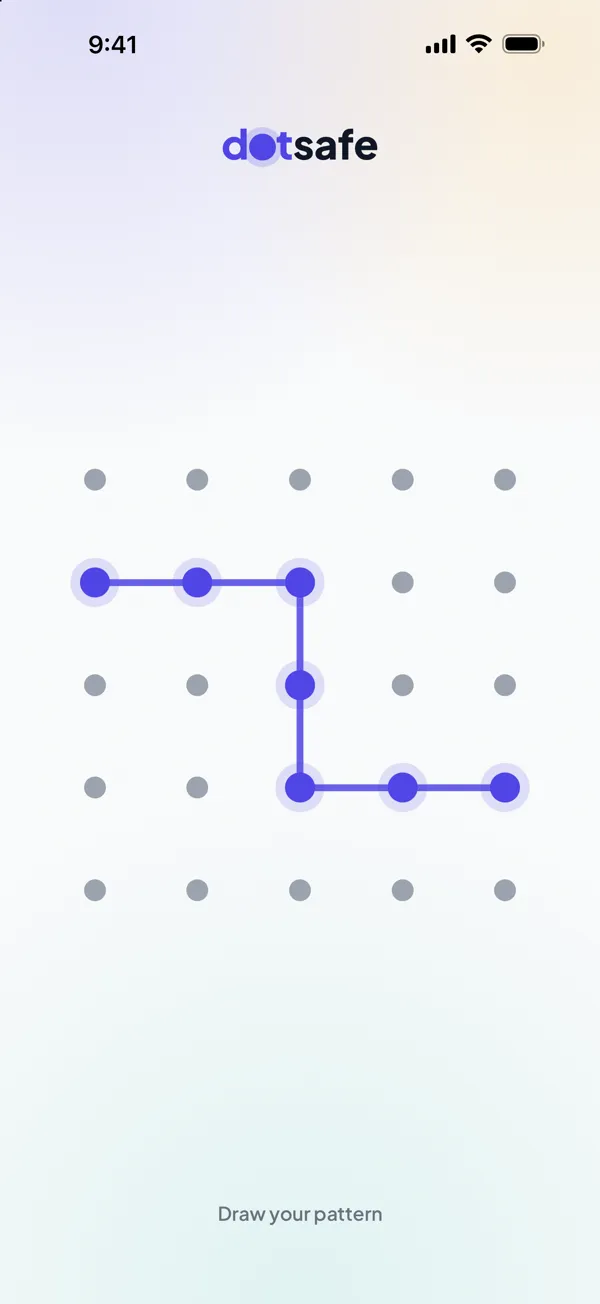
DotSafe uses the second approach. It looks like a vault app, because it is one. But every pattern opens a vault, and no pattern is ever wrong. If someone makes you open it, you can draw the pattern of a vault with ordinary photos in it. Nothing in the app shows that other vaults exist. You can also hide DotSafe with iOS, if you want both. Setting up a decoy vault explains how.
Questions
Are calculator vault apps safe?
Some are and some are not. The calculator is only a disguise. A safe one encrypts each photo on your device with a key that only you hold, needs no account and shows no ads.
Can someone find a hidden calculator vault?
Yes. Its real name is on the App Store and in your purchase history, and Settings shows how much storage it uses. A person who looks closely can find out what it is.
Is there a better way to hide a vault app on iPhone?
On iOS 18 and later, you can hide any app that you downloaded from the App Store. Touch and hold the icon, tap Require Face ID, then Hide and Require Face ID.
What should I look for in a secret photo vault?
Encryption of each file on the device, a key that the developer cannot recover, no account, no ads and "Data Not Collected" on the App Store privacy label.